Building a Useful Cost Record for a Small Trucking Fleet

A small carrier can know its total fuel bill and still struggle to explain why one type of assignment leaves less room for profit than another. Expenses often arrive in different places: a card statement, a workshop invoice, a driver's receipt and a software subscription. A practical cost record connects each amount to a purpose and a period. It helps the owner ask better questions without turning every dispatch decision into a full accounting exercise.
Start with a consistent trip identity
Give each assignment a reference that can appear across the dispatch and expense records. Keep the customer, service date and vehicle identifiers linked to it. The number does not need to encode every detail. It needs to remain stable when the same trip is discussed by the driver, office and bookkeeper.
Decide how to handle a load that changes vehicles or crosses an accounting period. Preserve the original relationship and record the change. If a repair moves the load to a spare tractor, the freight trip and the maintenance event remain connected without becoming the same transaction. This makes later comparisons easier to interpret.
Separate categories before calculating averages
Choose categories that reflect decisions the business can make. Fuel, maintenance, tolls, parking and recurring administrative services answer different questions. Ask the accountant how the official records should classify them and use compatible labels in the operational view. Avoid inventing a second system that must be reconciled by hand every month.
One useful test is to ask what an increase would mean. Higher fuel spending may reflect more work, a different route mix or a change in price. A higher subscription bill may reflect a new contract. Combining them into miscellaneous operating cost hides the point at which the owner could investigate or take action.
Record what a receipt can establish
A receipt shows a transaction with a seller at a particular time. It may need more information to identify the business purpose or vehicle. Add the carrier's required reference while the driver or service writer can still confirm it. Keep the original document according to the business's retention process.
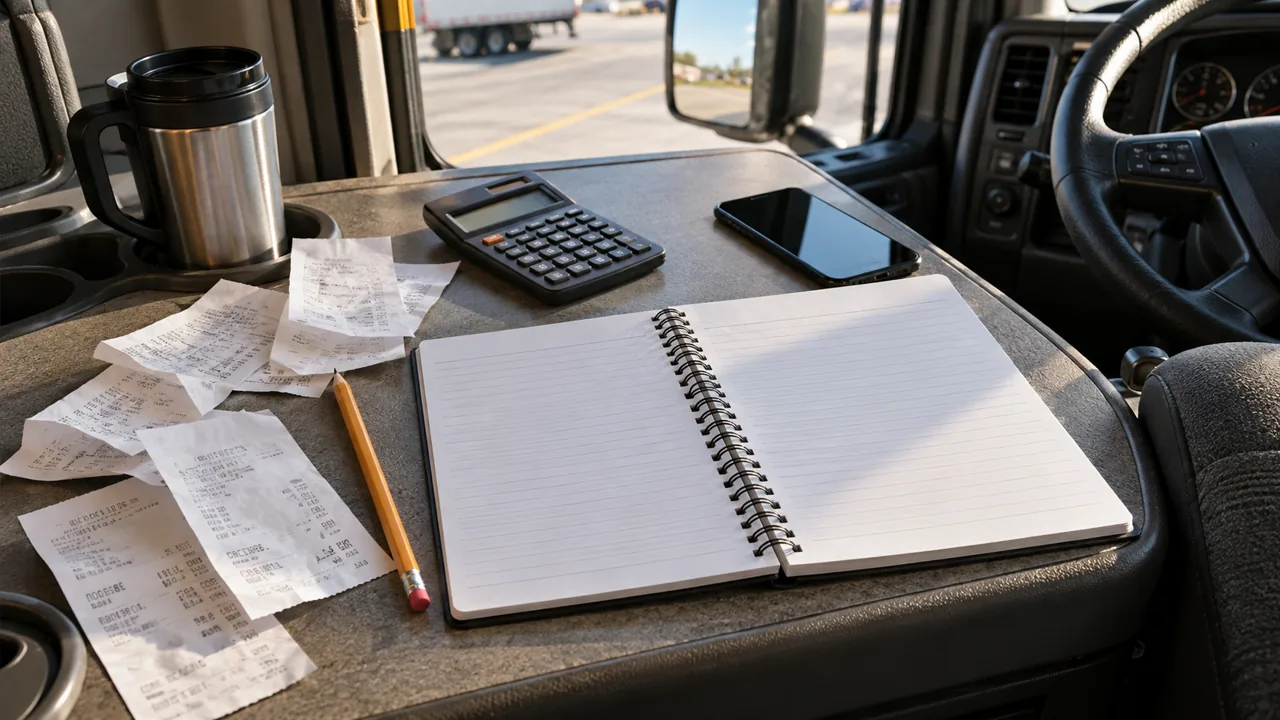
For example, two tractors may receive similar service from the same shop on one afternoon. Matching both invoices to the fleet name produces a plausible total but a weak vehicle history. The unit and work-order reference make the expense useful to maintenance planning as well as bookkeeping. Resolve an ambiguous identifier before memory becomes the only evidence.
Give shared expenses an explicit treatment
Some expenses relate to one job. Others support the fleet over a period. Work with the bookkeeper or accountant to choose a consistent treatment for shared costs in the comparison being made. Explain the method beside the result so another reader can distinguish directly recorded amounts from allocated ones.
Imagine comparing two routes while assigning the entire monthly software bill to whichever route happened to run first. The arithmetic could be correct and the conclusion misleading. A modest operational spreadsheet should make its assumptions visible. Changing a method can be appropriate, but comparisons across time need to acknowledge when that method changed.
Review exceptions before the month closes
Set aside a short regular review for expenses without a trip, vehicle or approved purpose. A small unresolved queue is easier to investigate than a box of receipts assembled at year end. Ask the driver about an unfamiliar parking charge while the location and circumstances are still recognizable.
The IRS guidance on business recordkeeping provides background on maintaining supporting records. Tax treatment and the carrier's financial reporting need the appropriate professional review. The operational benefit is simpler: a document that can be matched promptly is more useful than one that requires a later reconstruction.
Compare similar work

A busy urban delivery route and a long highway trip place different demands on the fleet. Before comparing cost per trip, consider the service provided, the equipment and the period involved. A raw total can describe activity while hiding the reason the activity costs more.
The Small Business Administration business-finance resources offer broader planning context. Within the fleet, begin with a narrow question, such as whether repeated extra visits are changing the cost of a particular customer arrangement. Choose comparable jobs and keep the assumptions with the result instead of turning one unusual week into a permanent rule.
Use the record to improve one decision
At the end of a review, identify an action the evidence can support. It might be asking for a clearer receiving arrangement, checking a recurring maintenance issue or changing the way drivers submit an expense reference. Assign the action and a date for checking whether it helped.
Keep the original figures available after making the change. A quieter month may result from less work rather than a better process. Compare the relevant activity alongside its cost and ask what else changed. A useful fleet record grows into a decision tool through these small, explainable connections between a transaction, the work it supported and the next question the owner needs to answer.
## Test the process against an ordinary invoice
Before introducing a revised expense form, follow a harmless sample invoice from submission to the accounting record. Ask the driver, office and bookkeeper to identify the trip or vehicle using the fields each receives. A reference entered at the beginning is useful only if it survives the transfer. Then introduce a correction, such as an approved credit, and check whether the original transaction remains traceable under the accountant's method. This small exercise can reveal a mismatch before a full month needs reconstruction, and it shows which role can correct the missing information at its source.

